
Sock Garment Production
Alkatek Socks started its operations in 2000 with an annual production capacity of 1,500,000 pairs of socks. Within 10 years, the company increased its production capacity to 20,000,000 pairs of socks and 4,500,000 pairs of pantyhose annually.
Alkatek Socks adopts the principle of managing all production stages within its own structure and considers its suppliers providing external sourcing as strategic partners.
Quality control processes have been defined and implemented for our entire production capacity. Our company is periodically audited by international and national inspection firms. Our facility, which closely follows the latest technological developments worldwide, possesses modern Lock and Punteriz machines that are rare in the industry and provide exceptionally high quality in pantyhose production.
All raw materials and accessories used are supplied by environmentally responsible companies holding international quality standards and ethical certifications.
Alkatek Socks carries out recycling and environmentally conscious production practices at every possible stage of manufacturing. In this regard, the company continuously invests in both physical infrastructure and employee training.
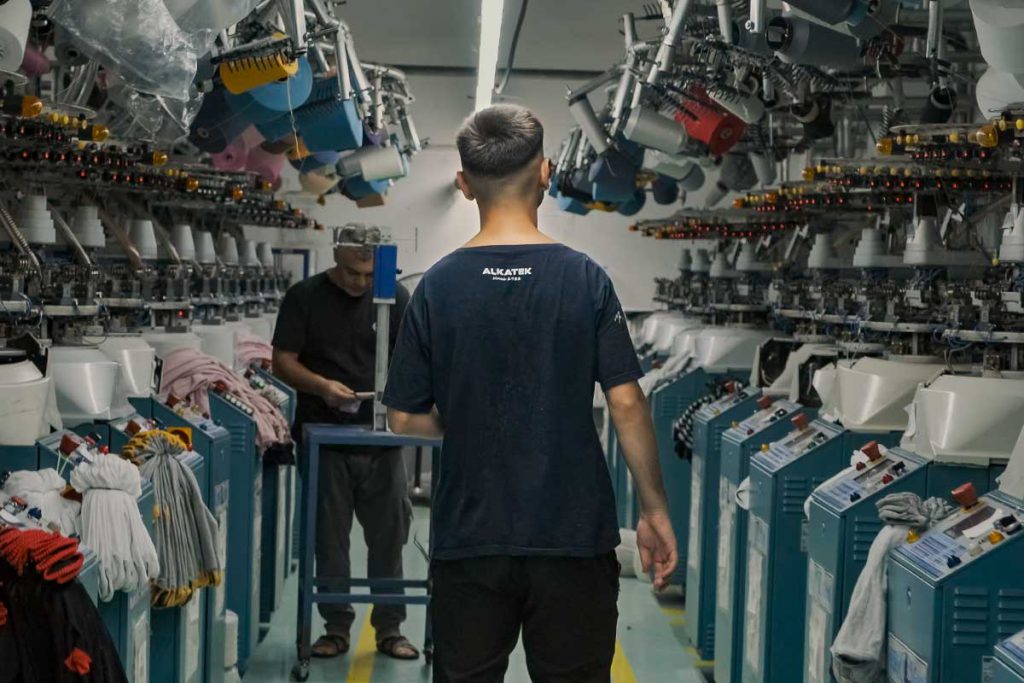
Garment production or ready-to-wear manufacturing is the general name given to the industrial branch where final processes such as sewing garments, adding accessories, and packaging are applied during clothing production. It is the industrial sector where fabrics are cut into specific sizes, sewing operations are carried out, and all components such as accessories and labels are added to prepare products for consumption.
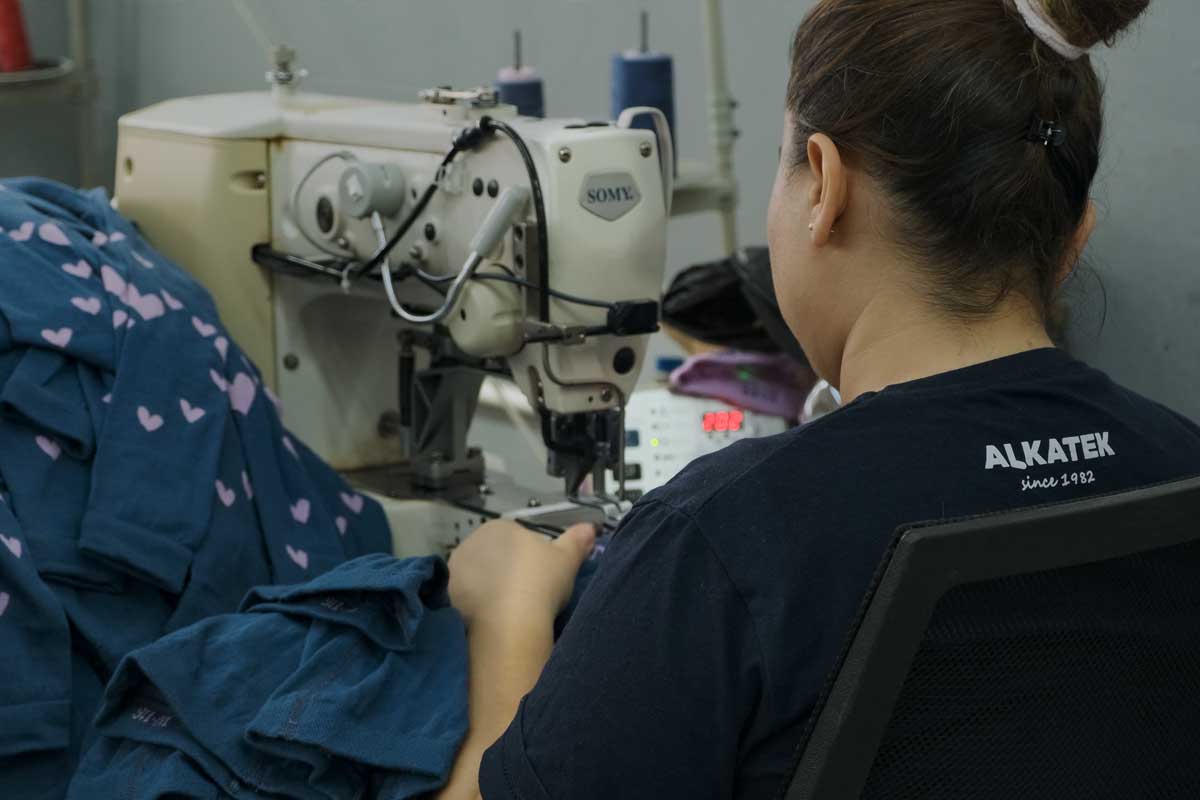
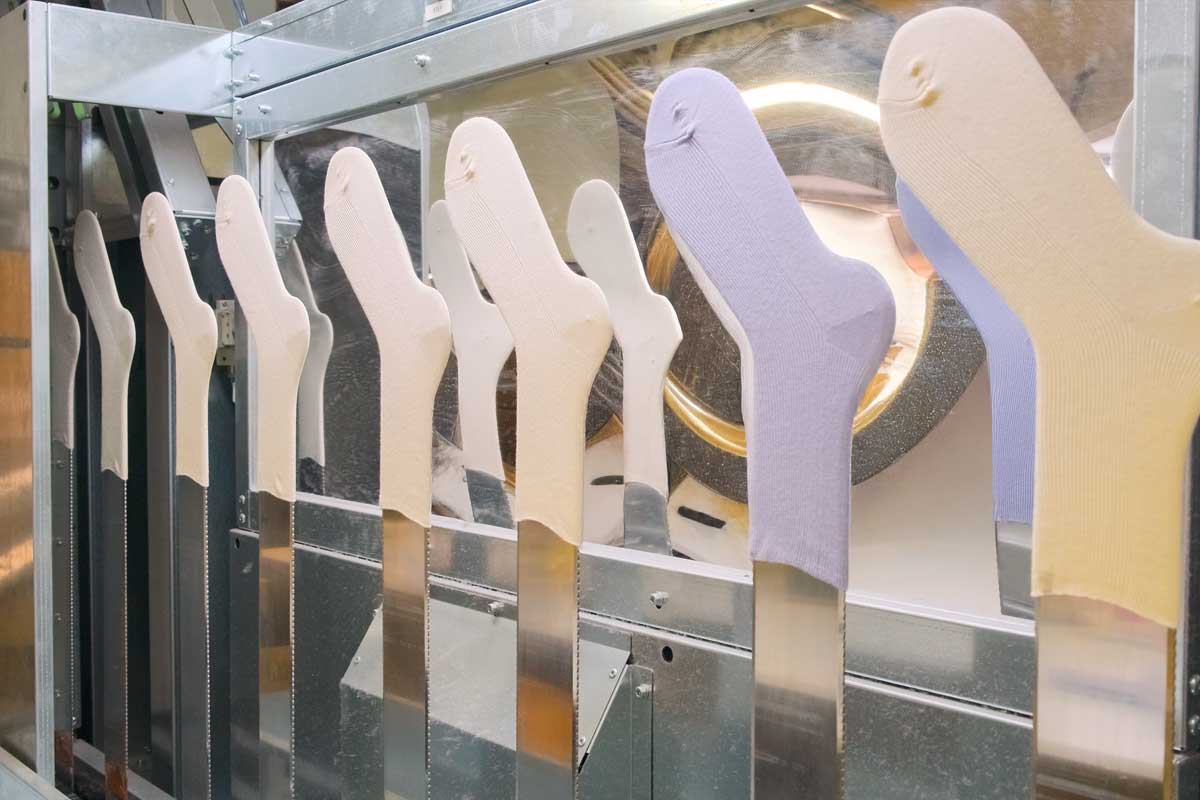
It is a type of enterprise where the final stage of textile manufacturing is carried out, especially after woven fabrics are cut in cutting rooms and sewn into desired forms and shapes using sewing machines. It is one of the least mechanized branches of the textile industry and therefore provides significant employment opportunities. Production is generally carried out by manufacturing units of various structures, characteristics, and sizes. In these enterprises, division of labor, specialization, machinery, and operational roles are clearly defined.